Koh Phangan Temples: Culture and Visitor Etiquette

Joy Beach Villas
หาดหินกอง เกาะพะงัน
Koh Phangan Temples: Cultural Guide and Sacred Sites
Long before the beach clubs wake up, Koh Phangan has already started its day: monks walk their alms rounds, and islanders prepare food to offer them. That routine explains why Koh Phangan temples are best approached as working community spaces, not as roadside photo stops. This guide covers the main sacred sites, how they differ, and how to visit with good manners, whether you are travelling as a couple, with children, or on your first trip to Thailand.
The Cultural Heart of Koh Phangan: Temples as Living Sanctuaries
The island is generally described as having around twenty Buddhist wats and Chinese shrines. Some are large and well known, others are small village compounds you could pass without noticing. All of them serve local life. People come to make merit, mark family occasions, attend festivals, and speak with monks. Visitors are welcome, but they are guests in a place of worship.
Thinking of a temple this way changes the visit. You slow down, lower your voice, and watch before you photograph. Many travellers find that this mindful approach is what makes Koh Phangan culture feel real rather than staged.
Theravada Buddhist Traditions and Daily Island Life
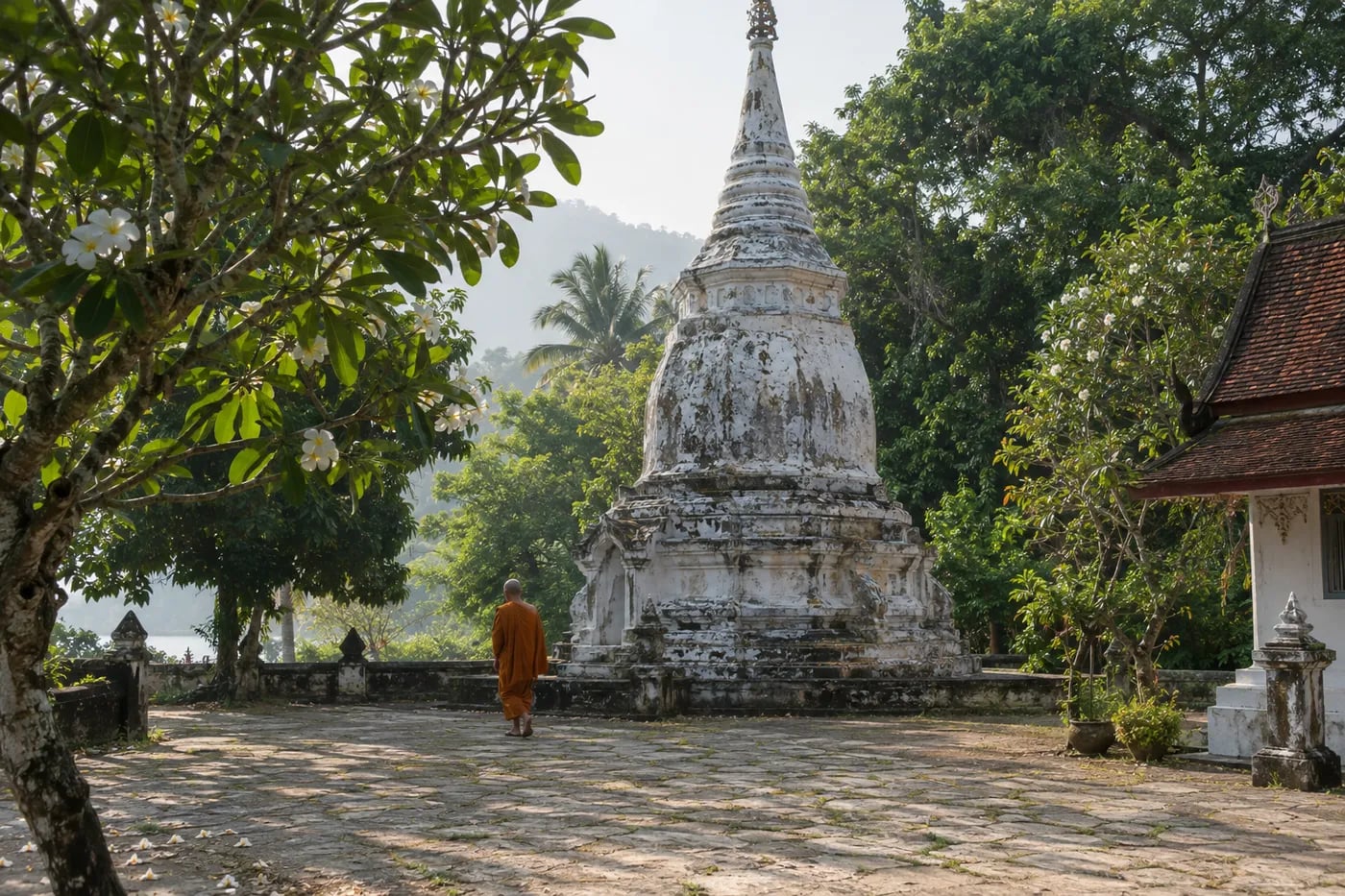
Most wats on the island follow Theravada Buddhism, the tradition practised across much of Thailand. Monks live at the temple and depend on the community for food. In the early morning, islanders offer rice and other food to monks on their alms rounds, which is a form of merit-making. Temple grounds also host ceremonies, blessings and community gatherings throughout the year.
If you see an offering or a ceremony in progress, keep your distance, stay quiet, and do not step into the middle of it for a better view. Respecting active ceremonies is one of the most useful habits a visitor can have.
The Blend of Thai and Chinese Spiritual Heritage
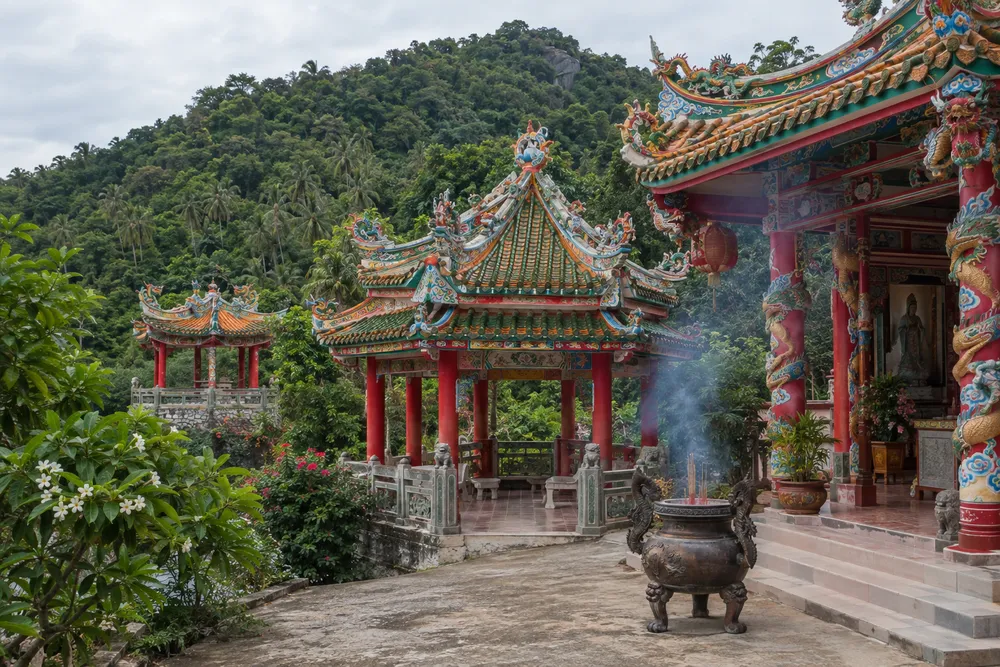
Not every sacred site on the island is a Thai wat. Chinese shrines, including the Guan Yin temple, belong to the Mahayana tradition and look and feel quite different from a Southern Thai Theravada wat. Thai wats tend to be built around an ordination hall (bot), a chedi and monks' living quarters, while Chinese temples often show bright colour, dragon motifs, incense burners and multi-tiered pavilions. Seeing both kinds shows how the island's spiritual life draws on more than one heritage.
Notable Koh Phangan Temples and Sacred Sites to Visit
The five places below suit different interests, from architecture to quiet reflection. Opening arrangements and visitor rules can change, so check locally or with your accommodation before setting out.
Wat Phu Khao Noi: The Island's Oldest Hillside Sanctuary
Wat Phu Khao Noi sits near Thong Sala, on a gentle hill that makes for an easy morning visit. It is often described as the island's oldest wat. Its most distinctive feature is a central white chedi surrounded by smaller stupas. Visitors can walk the grounds quietly and take in wide views to the south. Because it is close to the main town, it works well as a first stop for anyone new to temples in Koh Phangan.
Wat Maduea Wan: Intricate Naga Steps and Forest Solitude
Inland at Ban Maduea Wan, this wat is known for its multi-headed naga staircase, which rises across a moat towards a hillside shrine. The shrine shelters a revered Buddha footprint. The setting is a forested grove, and the atmosphere is traditional and community-centred. Stay on the paths, treat the carved naga balustrades with care, and remember that the footprint is an object of devotion, not a backdrop.
Wat Chaloklum: The Serene Whitewashed Fishing Village Wat
In the northern fishing village of Chaloklum, the wat stands out for its bright whitewashed walls and golden trim. It is the cultural centre of the community, and its ordination hall and annual village festivals show how closely temple life and village life overlap. Because it sits in the middle of a working settlement, dress modestly even if you have come straight from the harbour or the beach.
Guan Yin Temple: Chinese Architectural Splendour Overlooking the Bay
Along the road towards Chaloklum, the Guan Yin shrine rises along a ridge with colourful Chinese Mahayana architecture, ornate dragon eaves and multi-tiered pavilions. The views sweep across the northern coast. It is the most visually dramatic of the five, and a good choice for photographers and families with older children. Some independent shrines like this one may ask for a small maintenance contribution, so carry small notes. The same etiquette applies here: dress modestly, speak softly and respect any worshippers.
Wat Khao Tham: Hilltop Contemplation and Forest Meditation
In the hills above Ban Tai, Wat Khao Tham offers a forested setting with views over the southern bays. Visitors tend to come for quiet rather than spectacle. Its meditation-focused environment means silence matters more here than almost anywhere else, so keep conversation low and check whether any retreat activities are under way. You can read traveller reviews for Wat Khao Tham to get a sense of how other visitors have found the access and atmosphere before you go.
Comparing Koh Phangan's Notable Sacred Sites
If you only have time for two or three stops, choose by interest. Architecture lovers will lean towards the Guan Yin temple and Wat Maduea Wan, those drawn to village culture towards Wat Chaloklum, and anyone after stillness towards Wat Khao Tham or Wat Phu Khao Noi.
Temple Name | Location | Primary Setting | Atmosphere | Notable Cultural Feature |
|---|---|---|---|---|
Wat Phu Khao Noi | Near Thong Sala | Gentle forested hill | Quiet, historic, meditative | Island's oldest wat with white multi-chedi complex |
Wat Maduea Wan | Inland Ban Maduea Wan | Forested grove | Traditional, community-centred | Carved naga balustrades and Buddha footprint shrine |
Wat Chaloklum | Chaloklum Village | Coastal village centre | Open, peaceful community wat | Whitewashed ordination hall and annual community festivals |
Guan Yin Temple | Hillside above Chaloklum | Elevated mountain ridge | Vibrant, artistic, scenic | Multi-tiered Chinese pavilions and sea views |
Wat Khao Tham | Hills above Ban Tai | Shaded jungle canopy | Hushed, contemplative | Forest retreat setting and panoramic coastal viewpoint |
Essential Thai Temple Etiquette: A Respectful Visitor Guide
Good Thai temple etiquette is mostly common sense plus a few specifics that first-time visitors rarely know. Families can teach children these points in advance, which makes the visit calmer for everyone.
Dress Codes: How to Dress Modestly in the Tropics
Keep shoulders and knees covered, and avoid sheer or very tight fabrics. Lightweight cotton or linen trousers and a short-sleeved shirt work well in the heat. A light sarong or shawl in your bag solves most problems, since you can wrap it over bare shoulders or knees at the gate.
Footwear and Sacred Thresholds
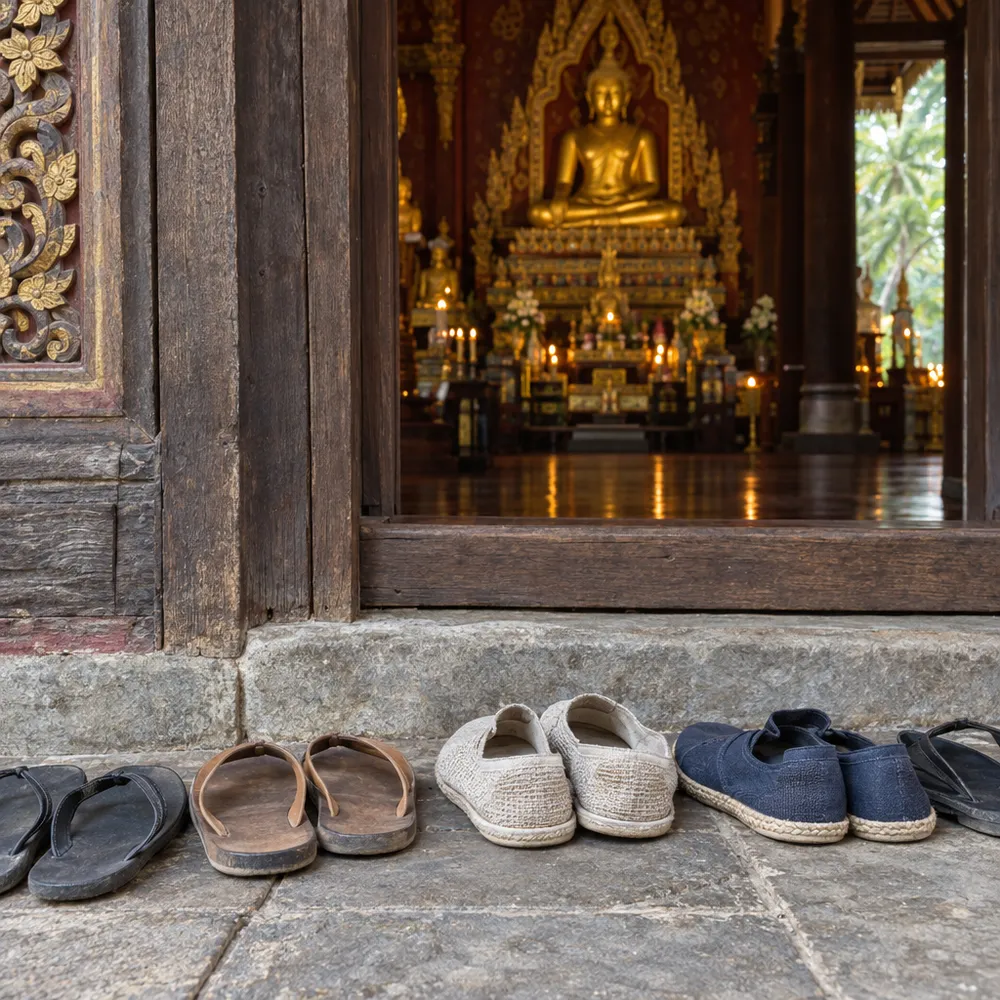
Remove your shoes before entering any temple building, including the bot. Many doorways have a raised wooden threshold, which traditional belief associates with resident guardian spirits. Step over it rather than onto it. Slip-on shoes make all of this much easier.
Mindful Behaviour: Speaking Quietly and Photography Manners
Keep your voice low and silence your phone. Do not pose playfully with sacred statues, and never turn your back on an altar for a selfie. Inside, sit with your legs tucked to one side, and never point your feet towards a monk or a Buddha image. Photography is generally fine in courtyards and public areas, but check for signs, skip the flash, and ask before photographing monks or worshippers.
Interactions with Buddhist Monks
Women should never touch a monk or hand anything directly to one. If you wish to give an item or an offering, place it on a receiving cloth or a table, and the monk will collect it. Men and women alike should wait to be addressed, speak gently, and avoid sitting higher than a monk. If you are unsure, watch what local people do and follow their lead.
Donation Boxes and Supporting Temple Upkeep
Entry to most island wats is free. A modest, voluntary donation in a designated merit box helps with maintenance and community projects. Carry small baht notes so you are not caught without change.
Broader Thai Customs: Navigating Island Life with Respect
The Wai: When and How to Offer the Traditional Greeting
The wai, a slight bow with palms pressed together, expresses respect, gratitude and peaceful acknowledgement. As a guest, returning a wai with your hands at chest level is warm and appreciated. Temple visitors are not required to start one, so there is no need to worry about getting it perfect.
Sacred Images and the Cultural Significance of the Buddha
Buddha images are objects of deep devotion, not decorative novelties. Avoid treating them as props, souvenirs or fashion statements. If you are thinking about taking an image home or having one tattooed, approach the decision with real cultural sensitivity and consider how it will be received by people for whom it is sacred.
Considerate Conduct in Local Neighbourhoods
Respect extends beyond the temple gate. Drive scooters at moderate speeds through temple zones and villages, avoid walking through residential areas in beachwear, and speak gently to local residents. These habits matter on a small island where visitors and villagers share the same roads.
Practical Tips for Planning Your Cultural Temple Tour
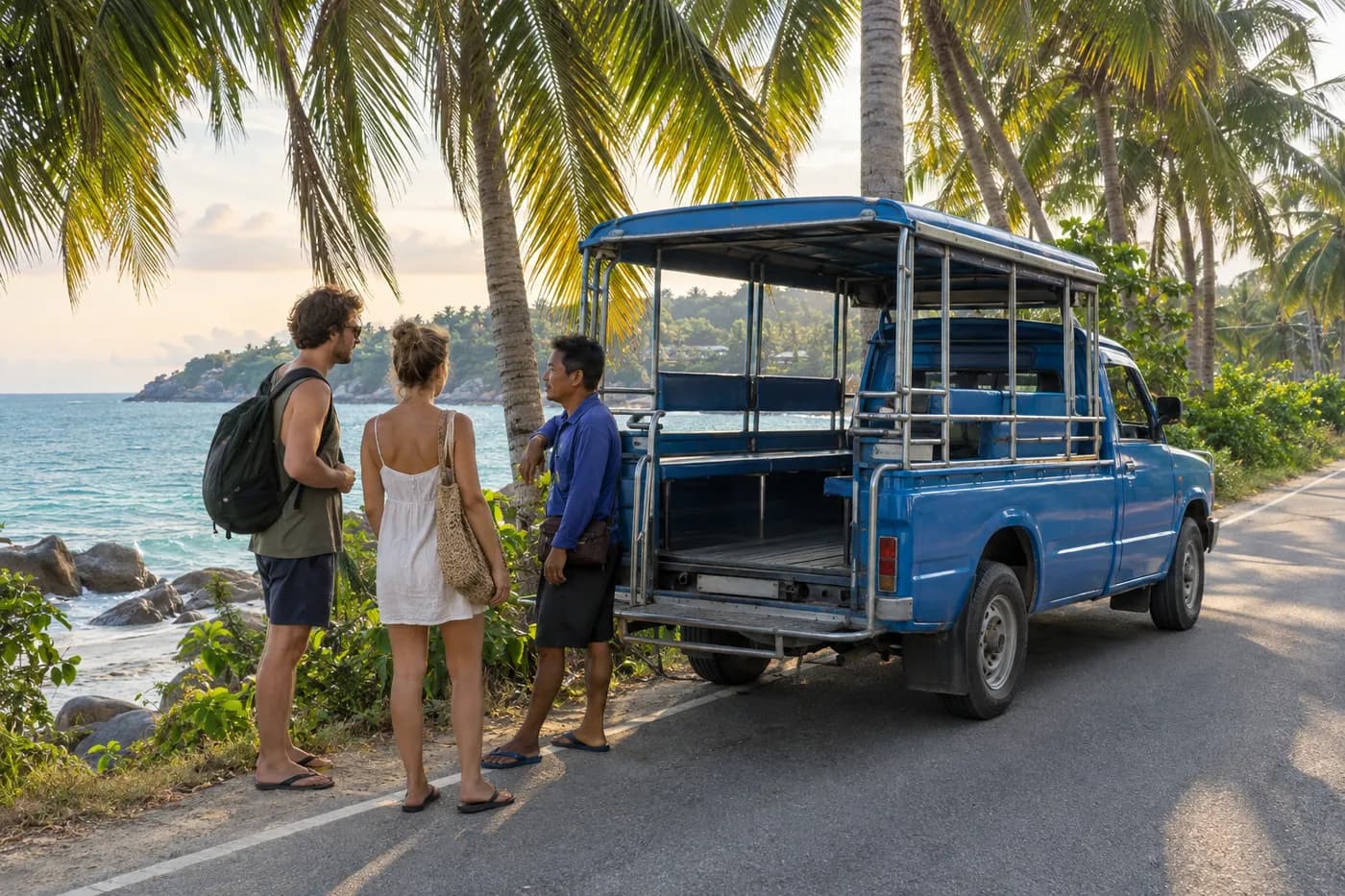
Go early. Between 07:30 and 10:00 the weather is cooler, the grounds are calm, and monastic routines are often visible. Hilly roads can be demanding, so experienced scooter riders may be comfortable, while a songthaew or private driver is a safer choice for couples and families.
Wear breathable cotton clothing and carry a sarong or shawl.
Choose slip-on shoes for easy removal.
Bring a refillable water bottle and small baht notes for donations.
Check signage for photography limits and closed areas.
Pause or step back if a ceremony or offering is taking place.
Pair a temple visit with a local market or a quiet village stroll, so you see the wat as part of everyday life. After a morning of cultural discovery, a calm place to stay helps the experience settle. JOY Beach Villas offers tranquil beachfront surroundings, a fitting base for reflecting on the day and planning the next one.
Frequently Asked Questions About Koh Phangan Temples
How much does it cost to visit temples in Koh Phangan?
Most Buddhist wats do not charge admission, though visitors are encouraged to leave a modest donation. Some independent shrines, such as the Guan Yin Chinese Temple, may request a nominal maintenance contribution.
Can non-Buddhists enter temple buildings?
Yes, non-Buddhists are warmly welcomed inside ordination halls and public grounds, provided they follow basic dress codes and behave respectfully.
What should I wear if I am visiting temples during a warm day?
Choose lightweight, loose-fitting cotton or linen trousers and a short-sleeved shirt that covers the shoulders. A light scarf or wrap is an easy way to stay cool while remaining modest.
Can I take photos inside temple halls?
Photography is generally permitted in courtyards and public areas, but always check for posted signs. Avoid flash, do not photograph meditating monks or worshippers without permission, and never turn your back on an altar for a selfie.
What is the best way to travel between temples on the island?
Renting a scooter is common for experienced riders. A local songthaew or private driver is a safer, more comfortable option for couples and families, especially across hilly terrain.
Approached with patience and a little preparation, Koh Phangan's temples reward visitors with something the beaches cannot: a view of how the island lives and believes. Plan an early start, dress thoughtfully, and let JOY Beach Villas be the quiet place you return to afterwards.